Every year, Thanksgiving weekend marks the unofficial start of the holiday shopping season. A record-breaking 186.9 million people are anticipated to shop over the weekend this year. Although many people view Black Friday and Cyber Monday as straightforward sales events, the truth is that these days are based on various psychological techniques that affect our thoughts, emotions, and purchasing decisions.
Retailers take time to create an environment that encourages customers to buy more items, more frequently, and quickly. However, people often find themselves purchasing things they had not intended to buy simply due to the offerings. What exactly is going through the minds of buyers on the biggest shopping weekend of the year, then?
Scarcity is one of the most powerful psychological strategies employed on Black Friday. The scarcity effect describes how people often place a higher value on something simply because it is limited in value. Stores employ this strategy when products are labeled “limited sock, “only two left,” or when sales end at midnight. When an item becomes or appears to become less available, the desire for it tends to increase, even if it may not truly be valuable or needed.
In online retailers, the urgency of “Black Friday week” deals is created through timers counting down to the end of the sale or pop-ups saying an item is selling out quickly. These employ the same scarcity strategies but in an online setting.
By highlighting limited qualities, possibilities of selling out, or flash sales, stores force shoppers to act quickly to prevent “missing out”. In order to protect oneself from scarcity messaging, buyers can ask themselves: “Would I still want this item if it were always available at this price?”
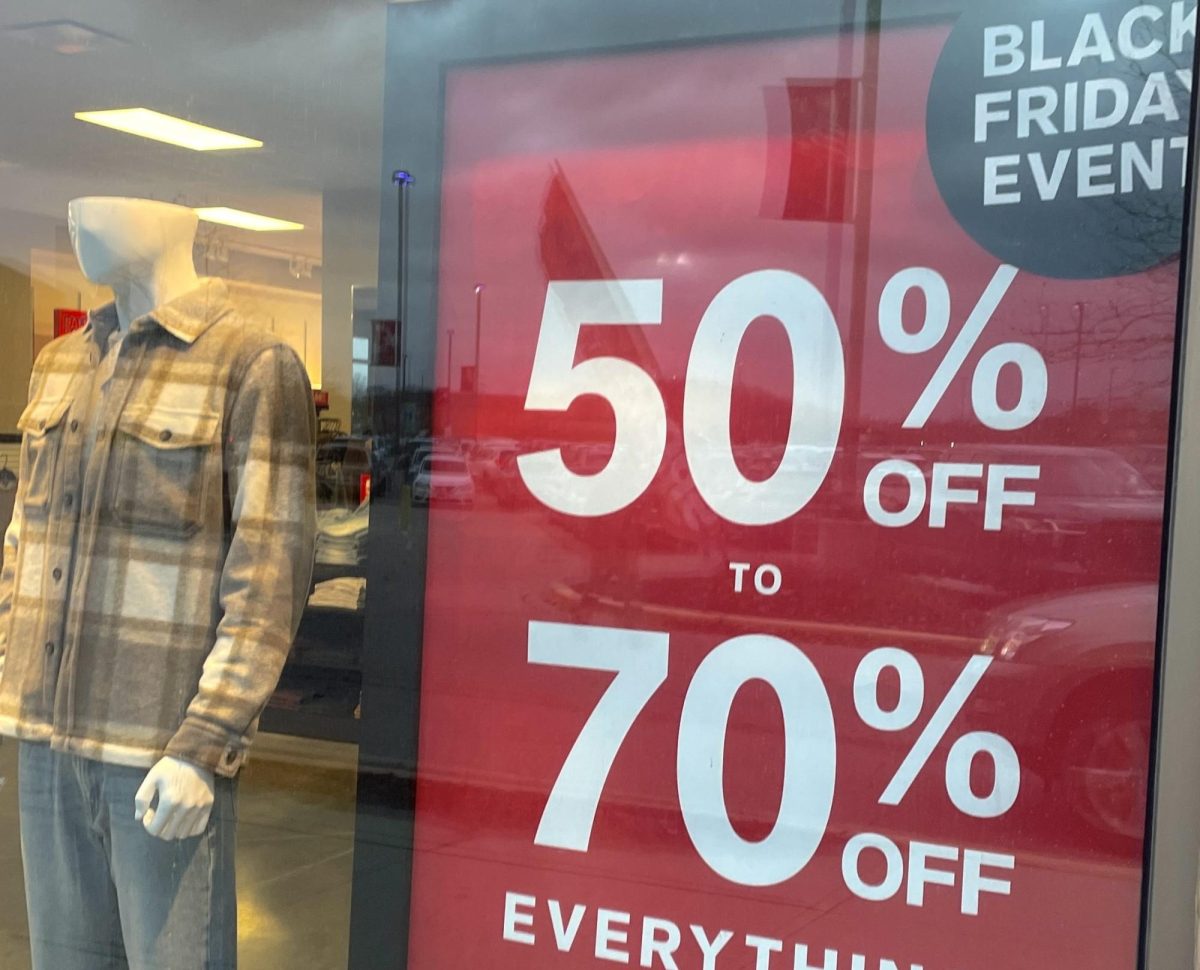
Anchoring is another tactic used by retailers. Buyers tend to evaluate discounts based on our perception of a product’s price rather than its true value. So, if a jacket is shown with an initial price of $100, then later marked down to $50, the customer uses the original price as the value anchor. In reality, the jacket may usually sell for around $60 throughout the year. As a result, the customer compares the discount to the anchor price of $100 and perceives a much greater markdown than they may truly be receiving. This is often used in retail and online settings when the large “original price” is crossed out with a smaller “sale price” next to it.

Black Friday is meant to feel competitive. Shopping turns into a game where people feel like they can “win” good deals before others. This is seen when buyers historically raced into stores for limited-time sales and, more recently, online buyers clicking “add to cart” before stock runs out.
Dopamine, the brain’s reward chemical, is released as a result of this competitive feeling. Therefore, Black Friday makes shopping feel thrilling, urgent, and fulfilling even though it’s typically tiring and time-consuming.
In a more subtle and digital manner, Cyber Monday and often Black Friday as well appeal to many of the same instincts. To encourage impulsive purchases, online retailers employ personalized recommendations. Messages like “you might also like…” or “people like you also bought…” are designed to push buyers to add extra items to their carts. When recommendations appear to be personalized, customers tend to make more impulse purchases when, in reality, the algorithm is simply guessing based on browsing history.
Despite the excitement and build-up, the typical customer often spends more money over Thanksgiving weekend rather than saving it. This is because the rush of sales gives the impression that purchasing in larger quantities is a wiser financial decision. Even if buyers never needed the item in the first place, they may tell themselves, “I saved $50 on this.” Retailers rely heavily on this reasoning to prompt unnecessary purchases.
When customers become blinded by deals and savings, they find themselves spending more in total for products they may not need. Through this, retailers are not simply lowering prices; they are persuading customers to purchase items they might otherwise consider.
Black Friday and Cyber Monday can provide significant discounts, particularly for appliances, technology products, and clothing. However, the psychological strategies used in sales are intended to make the experience seem more urgent and fulfilling than it actually is.
Customers must be aware of the tactics at work, such as scarsity, anchoring, competition, and impulse triggers. By understanding these tricks, buyers can shift their mindset and determine for themselves whether they’re getting a real deal or are simply under the grasp of these psychological techniques. The best deal this Thanksgiving weekend is not always the cheapest; it’s the one you actually want.