This article contains spoilers for “Wicked: For Good.”
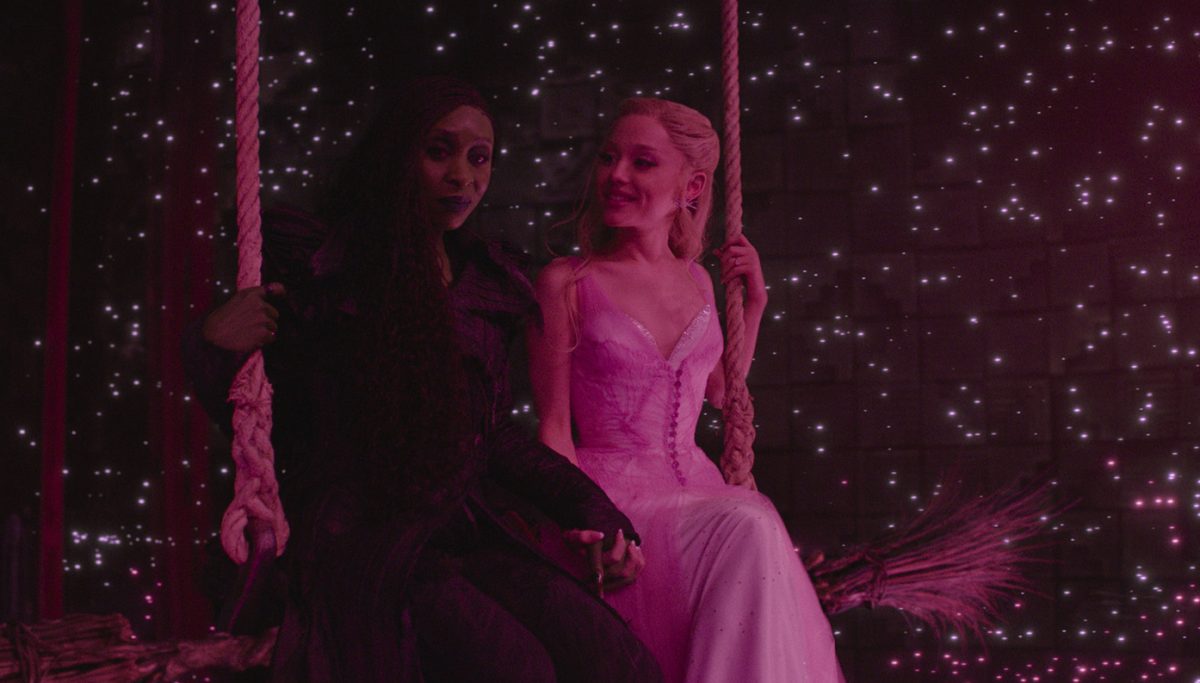
Together, Elphaba and Glinda are unlimited.
Jon M. Chu’s musical movie “Wicked: For Good” concludes the journey on the yellow brick road. In contrast to its earlier installment “Wicked: Part One” (2024), “For Good” takes audiences through a faster-paced and darker reality of the fictional Land of Oz, placing itself as an addictive and emotional 137 minutes of pure cinema.
Released on Nov. 21 by Universal Pictures, the principal cast from “Part One” carries over into “For Good” (formerly named “Wicked: Part Two”): Ariana Grande, Cynthia Erivo, Jonathan Bailey, Jeff Goldblum, and Michelle Yeoh, with the additions of Marissa Bode and Ethan Slater from the predecessor’s supporting cast.
Now a slandered “Wicked Witch of the West,” Elphaba (Erivo) remains committed to helping the oppressed animals of Oz, despite propaganda efforts by the Wizard (Goldblum) and Morrible (Yeoh). Her best friend—now Glinda the Good (Grande)—serves as Oz’s official spokesperson to reassure citizens. Fiyero (Bailey) actively searches for Elphaba as captain of Oz’s army. With their paths diverging and a girl from Kansas shaking their world, Elphaba and Glinda’s friendship and what it truly means to be “good” is put to the test.
The film introduces two new songs—“No Place Like Home” and “Girl in the Bubble”—written by Stephen Schwartz (composer of both the stage and film versions) and Erivo (for “No Place Like Home”) specifically for the movie that is not found in the Broadway version.
Elphaba’s song “No Place Like Home” is a rallying cry to the animals to help join her cause in standing up for themselves and for what’s right. Although repetitive (yes, we get the reference to the Wizard of Oz), it is an empowering and touching song, showing Elphaba remains committed to helping Oz despite Oz turning on her. It’s a much needed slower song to contrast the preceding celebratory song, “Thank Goodness/Couldn’t Be Happier.”
“Girl in the Bubble” is Glinda’s ballad which self-reflects on her privileged life as a mob closes in on Elphaba. While its lyrics are too on the nose, Grande’s angelic vocals and emotional acting mostly make up for it.
Although the main theme of “Wicked: For Good” is friendship, it also has heavy political themes, akin to the basis of the film, Gregory Maguire’s 1995 “Wicked” novel.
A heavy critique is placed on authoritarianism. In this Oz, animals are “rebels” and become forced laborers or imprisoned under the Wizard’s power. Elphaba’s sister Nessarose (Bode) is a tyrannical governor, forbidding both animals and the entire race of Munchkins from leaving. The all-too-powerful Wizard of Oz and Morrible use a confused Dorothy as a political pawn to ensure Elphaba’s death.
These themes remain relevant in contemporary politics and spread a powerful message: to stand up for what is right.
Erivo and Grande’s performances were, once again, breathtaking. Erivo had a powerful and vocal-driven “No Good Deed,” Grande’s ability to shift her character from a complicit spokesperson to committing to becoming a better figure, and the duo’s emotionally-charged farewell song “For Good” marked a bittersweet finale that made sure everyone in the audience was crying, or at least tearing up.
Most of the pacing issues lie in the source material, as the second act of the stage version is famously known for being extremely fast-paced. Chu, Schwartz, and Winnie Holzman (“Wicked” stage writer) did their best to adapt a one-hour-long second act of “Wicked” and remain faithful.
Despite these pacing issues, the colorful “Wicked: For Good” provides a satisfying yet bittersweet conclusion to Elphaba and Glinda’s story. Erivo and Grande’s performances are compelling and convincing. The film truly leaves audiences changed — for the better.
“Wicked: For Good” is rated PG. You can watch the trailer here: