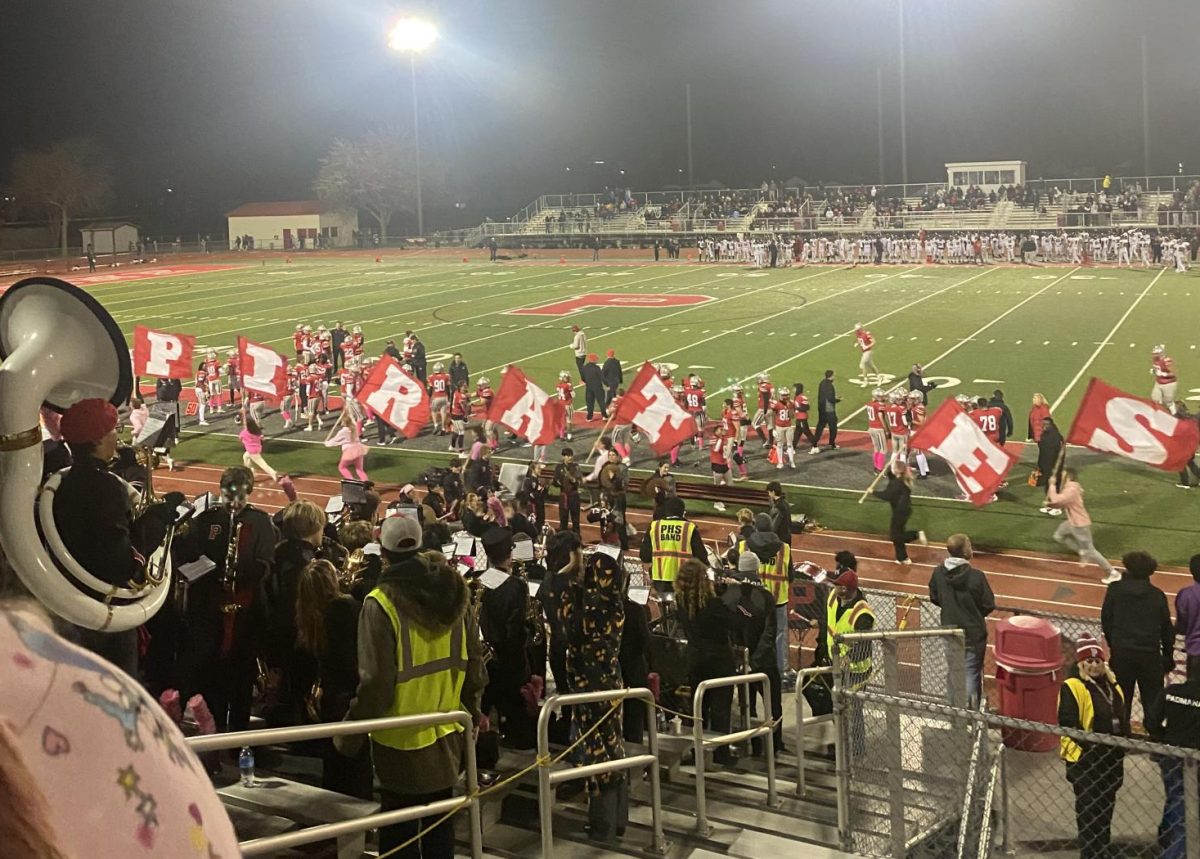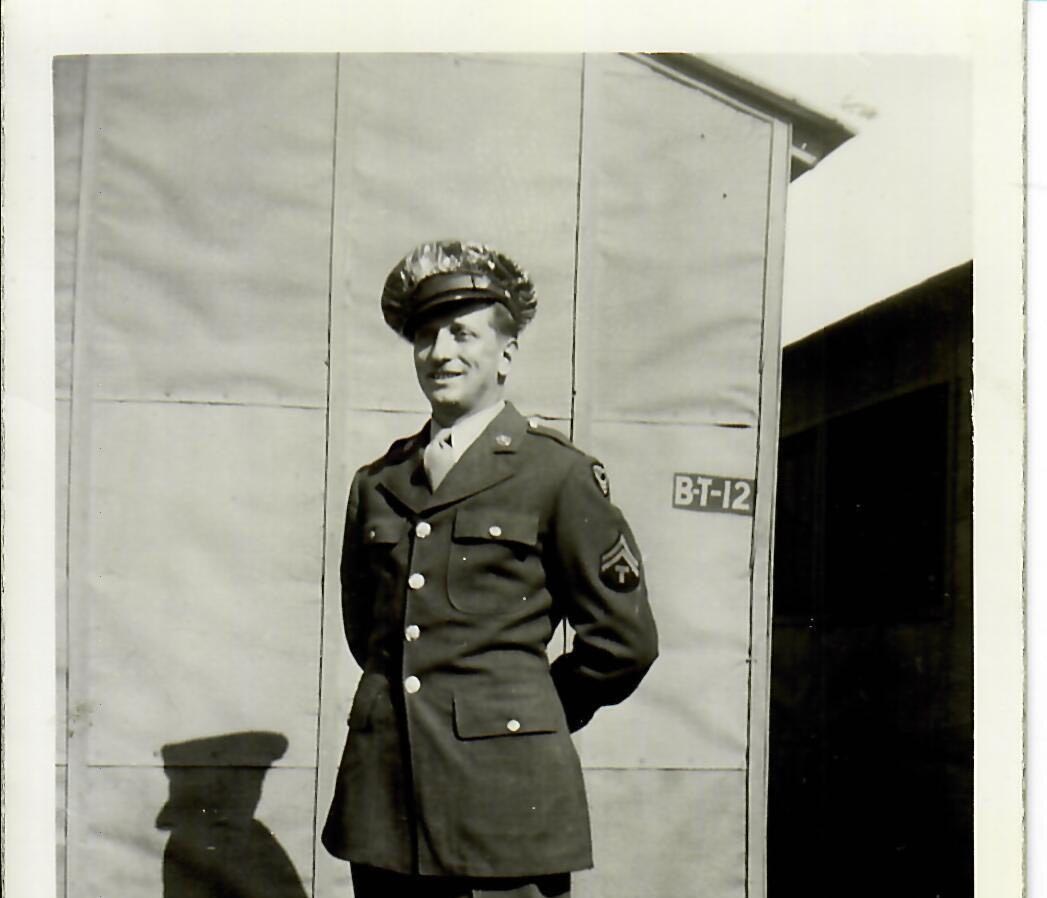
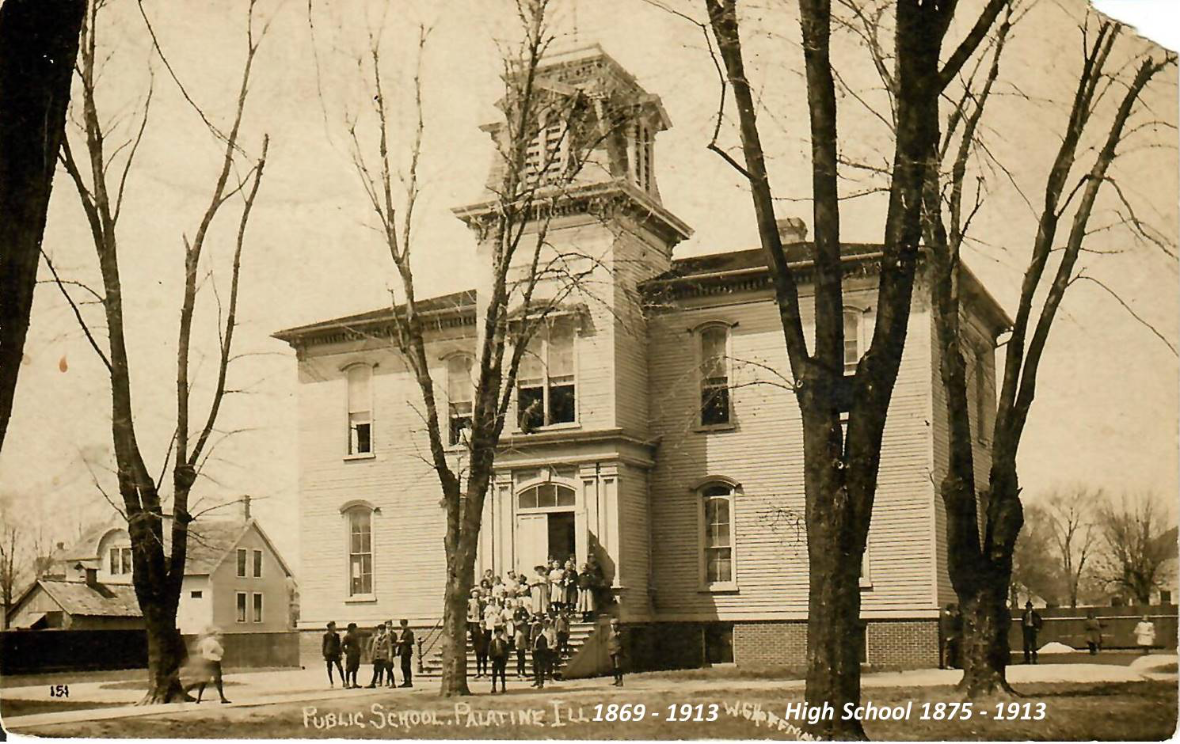
Routine air raid drills would have been unthinkable just a few years earlier. In the late 1930s, the conflict in Europe still felt distant, and many Americans hoped the country could remain on the sidelines.
In an April 1939 editorial, Spotlight students described the growing tension in Europe as “the question of war or peace,” discussing expanding dictatorships and asking whether democratic nations would act, even if it meant going to war.
Many students, however, believed the United States would avoid another European conflict.
“The United States has nothing to gain and everything to lose,” wrote student Katherine Wiggins.
That belief reflected a broader national mood, where memories of World War I still fueled strong anti-war sentiment. Yet even as students hoped for neutrality, the war overseas was impossible to ignore. In a 1940 column, Assistant Editor Evelyn Wente reminded readers how fortunate Americans were to live far from the fighting.
“We possess peace and freedom,” Wente wrote, urging Americans to “prudently and wisely guard those treasures.”
The contrast between American normalcy and European devastation came into sharper focus through the letters of foreign correspondents. In 1940, student Charlotte Snyder shared a letter from her French pen pal, Thérèse Carrie of Cherbourg. Carrie described how schools darkened their windows for air raid precautions and sent students to cellars during alarms. Blackout restrictions had already shortened school hours.
Stories like these reminded Palatine students that war was already reshaping lives across the Atlantic. Before long, it would reshape theirs as well.
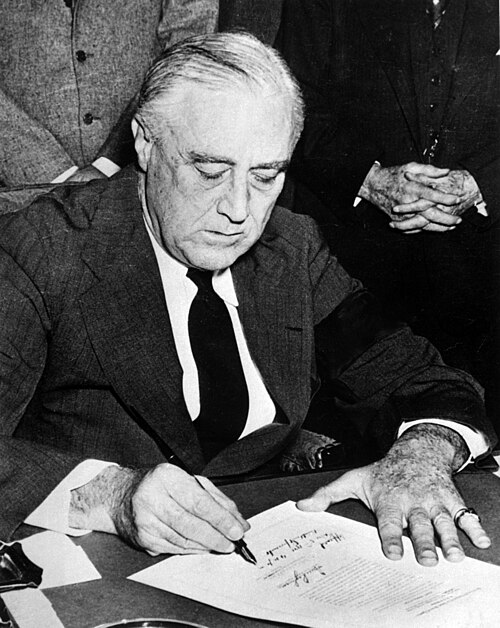
“Then suddenly it all changed,” student Mildred Ensign wrote in The Spotlight. “We were sitting in our Junior English class, and we heard the president’s declaration of war on Japan.”
On Dec. 8, 1941, President Franklin D. Roosevelt asked Congress to declare war following the Japanese attack on Pearl Harbor the previous day. For students at Palatine High School, the announcement marked the moment a distant conflict suddenly became part of their daily lives.
In the months before the attack, student life had looked very different. Ensign recalled listening to Cole Porter songs, laughing at comedians like Bob Hope and Red Skelton, worrying about fashion trends and school dances. After Pearl Harbor, those concerns gave way fast. Students learned air raid procedures, wore “V for Victory” pins and enrolled in Red Cross and home nursing training programs.
“We kissed the boys goodbye,” Ensign wrote.
In February 1942, students experienced their first air raid drill. Though it came without warning, the building was evacuated in less than two minutes. The patriotism of the moment spilled into The Spotlight’s pages as well. In a 1942 poem titled “The Soldiers of Liberty,” student Dan Erdevig honored those serving overseas, writing that their sacrifices were made not for “riches, the wealth, and the name,” but for “honor, glory and fame” in defense of the nation.
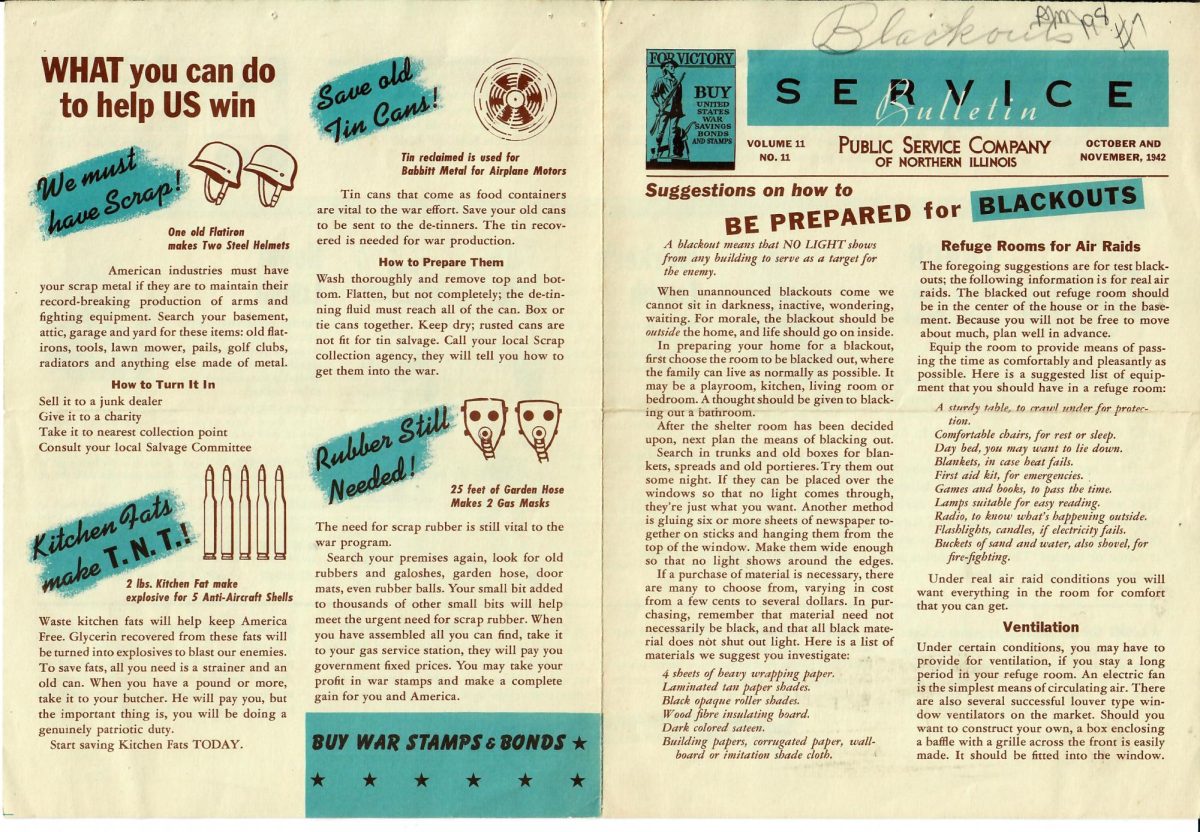
A service pamphlet given out by the Public Service Company of Northern Illinois gave Palatine residents information on how to stay safe from enemy air attacks.
They urged residents to be prepared for blackouts, long periods of time where every light needed to be off in order to make it harder for enemy bombers to spot targets.
Despite the country’s geographical seclusion from most of the conflict, many Americans feared the worst.
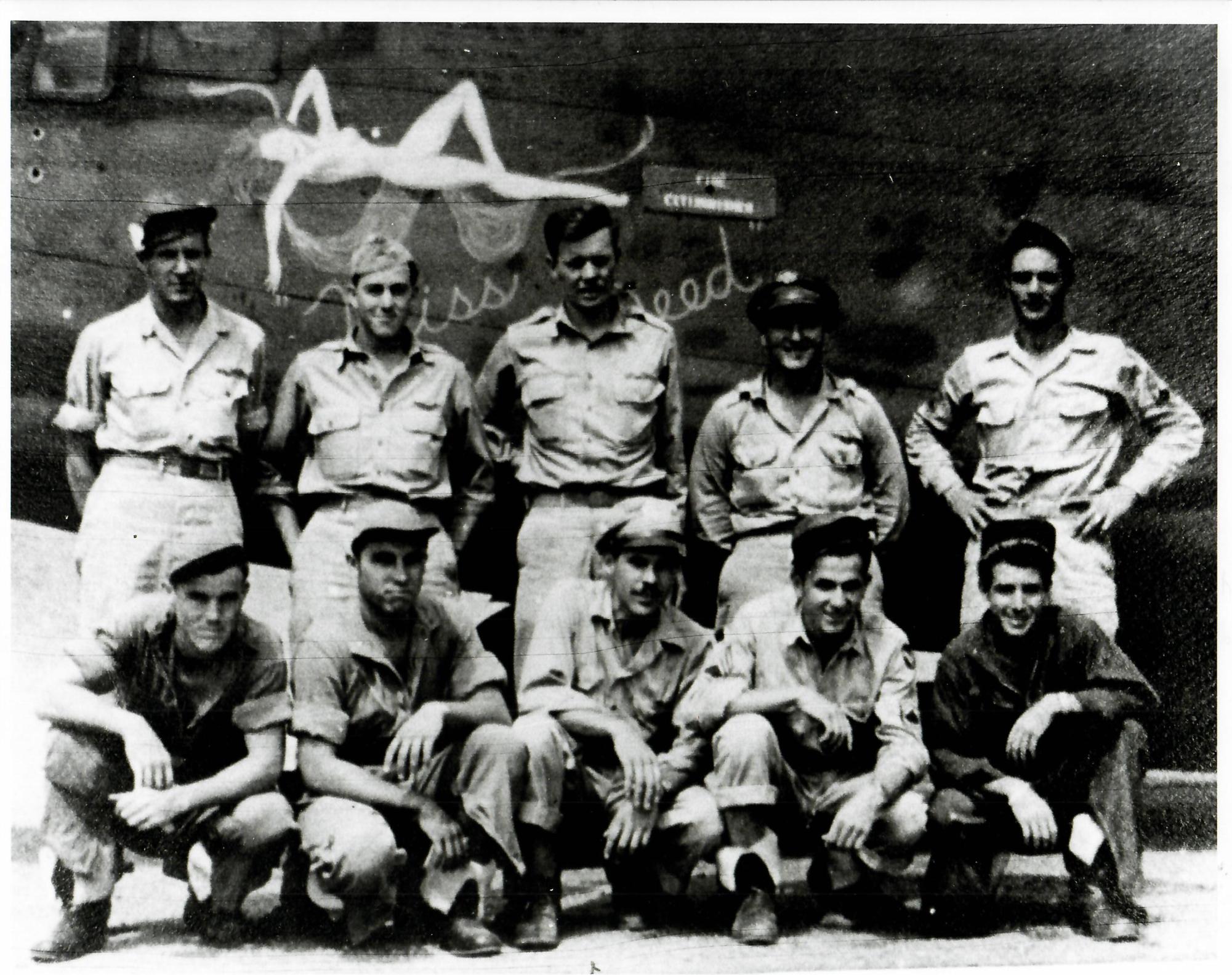
No story from Palatine’s war years captures the personal cost of the conflict more fully than that of John O’Brien.
Born and raised in Palatine, O’Brien played football, basketball and track at Palatine High School, serving as the Pirates’ quarterback in 1936. After graduation, he worked for the Chicago Tribune, married Kathryn Hans in 1941 and trained as a B-24 bomber pilot with the Army Air Corps.
By June 1943, O’Brien was deployed to New Guinea. His plane, Miss Deed, participated in air raids, including attacks on Rabaul. That same month, his son John Jr. was born—though O’Brien never saw him.
On Nov. 6, 1943, O’Brien’s plane went missing during a mission. He and his crew were listed as missing in action; their bodies were never recovered. The day before he disappeared, he had been awarded the Distinguished Flying Cross. His wife Kathryn later received the Silver Star on his behalf. Memorials in Palatine and in the Philippines honor his service.
O’Brien’s story was not unique in its sacrifice—but it was uniquely Palatine’s. And it was one of countless personal losses that gave the broader mobilization effort its human weight.
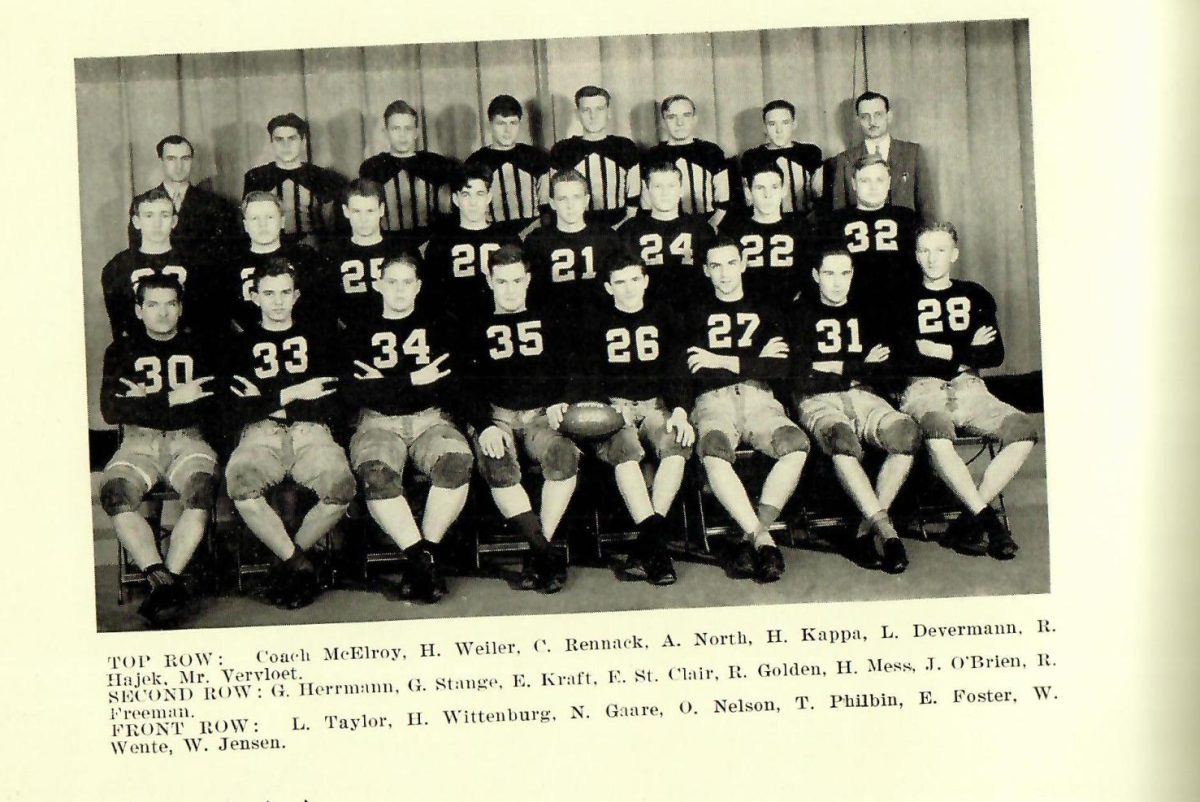
John O’Brien (#22), seen towards the right in the middle row, was Palatine High School’s quarterback in 1937. The team picture can be seen here in the 1937 edition of the yearbook.
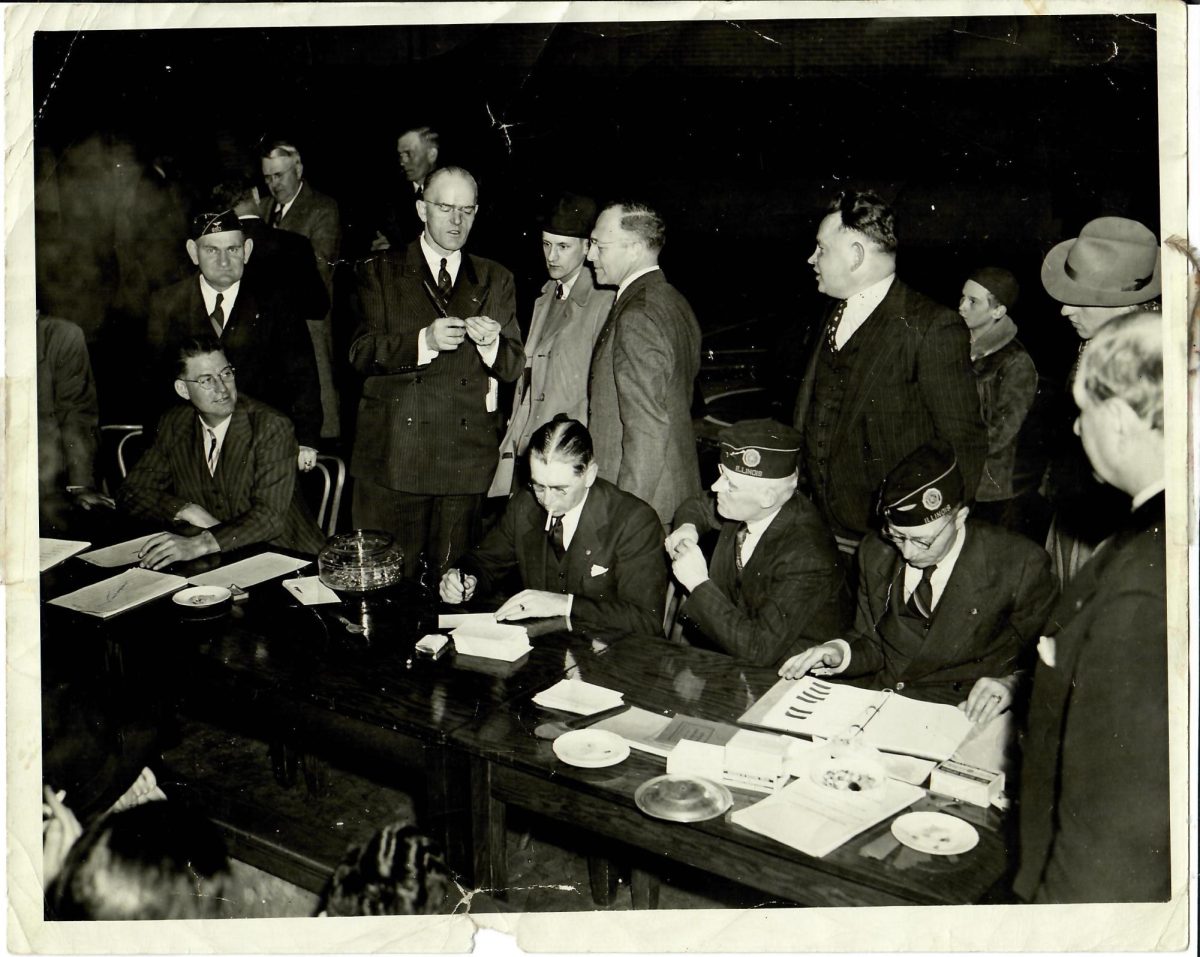
Back home, the war was reshaping the school community itself. Teachers left their classrooms as military service pulled educators and families into the national effort. In 1942, The Spotlight reported several faculty departures, including a teacher leaving to join her husband in the U.S. Army and another relocating for military duty in Texas.
The mobilization extended into the broader Palatine community. In 1943, the Woman’s Club of Palatine included a prayer in its annual booklet for those serving overseas. “Oh, may that day be not so long in coming when all the people of the earth are free,” it read, asking that hearts would one day be “filled with gratitude” when peace returned.
The club also helped support the war financially. During a “National Defense Night” that year, members sold $312 in war bonds and stamps. Meetings devoted time to the United States’ Good Neighbor Policy, a program promoted by President Roosevelt that encouraged stronger ties with Latin American countries. Speakers described travel experiences in South America, displayed souvenirs from Mexico and discussed neighboring cultures as part of an effort to better understand allies across the Americas.
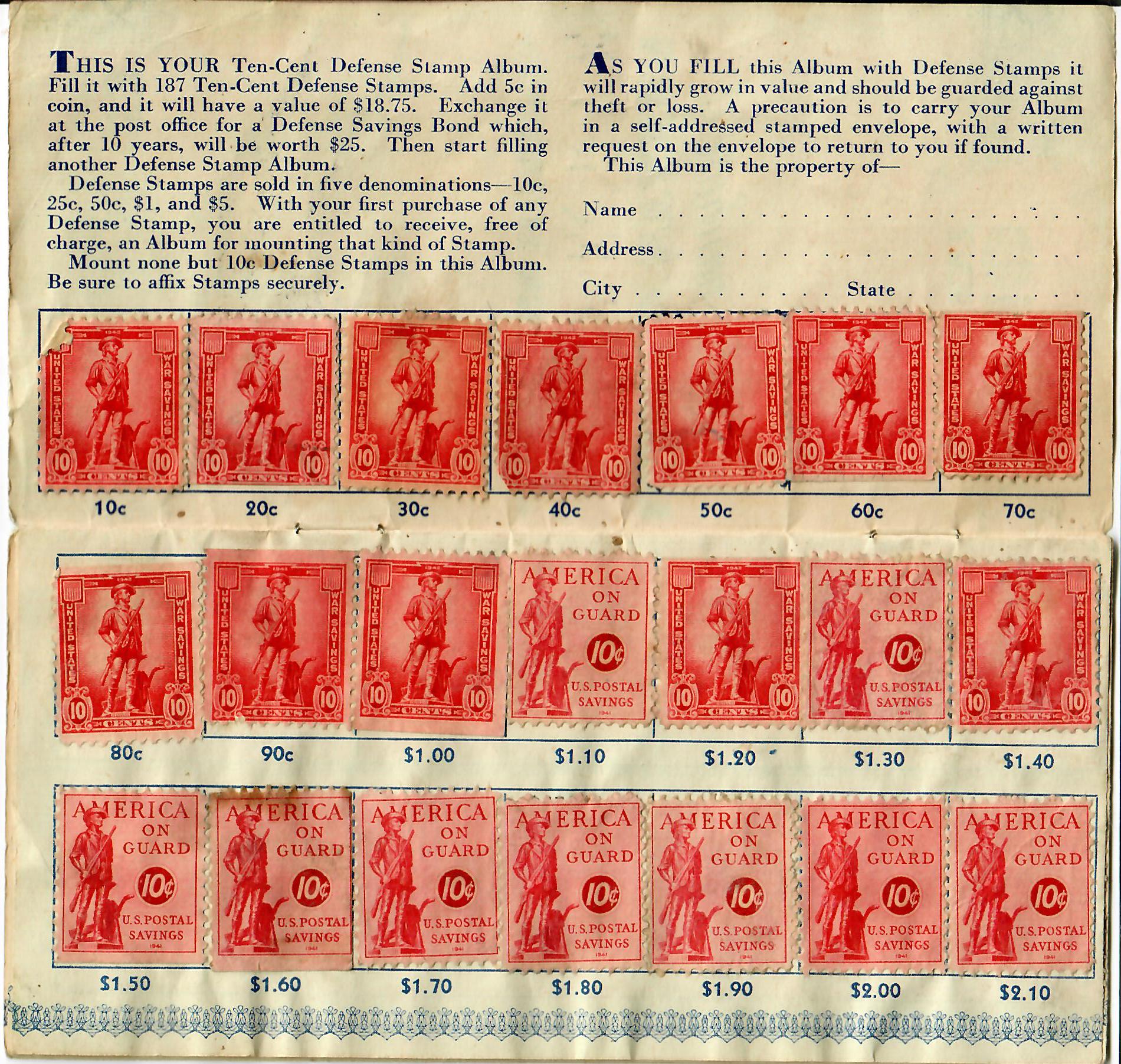
As the war intensified overseas, its effects tightened at home. Across the United States, Americans relied on ration books to purchase everyday goods. The system was designed to conserve resources for the military while distributing limited supplies fairly among civilians.
One surviving ration book from Palatine belonged to resident Harvey Engelking. Inside, printed warnings reminded users that ration stamps were government property and could not be traded or misused. A fuel oil ration card controlled how much heating fuel the household could buy during winter. Records from 1945 show Engelking applying for an increase in his family’s canning sugar allowance, illustrating how tightly controlled even common kitchen ingredients had become.
“It tells us what an enormous task mobilization was,” said Palatine history teacher Luke Miller. “They’re doing first-aid training, and night-watches, and organizing USO-type entertainment. People grew victory gardens, all in terms of supporting communities where the usual people who occupied these jobs and spaces had been called into service.”
Refugees also found safety in Palatine during these years. Mrs. Mellor and her five-year-old daughter Gillian arrived from Birmingham, England. Mellor described the terror of nightly air raids, sleeping under tables to avoid falling bricks and shrapnel, and the fear of German reconnaissance planes.
“Little Gillian could not understand why the Germans wanted to hurt little girls,” Mellor recalled in The Arlington Heights Herald.
Their journey to America had been perilous, facing submarine and air threats even before leaving Liverpool. For families like the Mellors, letters were the only link to loved ones left behind. For Palatine residents following updates from soldiers through correspondence and newspaper reports, the personal stakes of the global conflict had never felt closer.
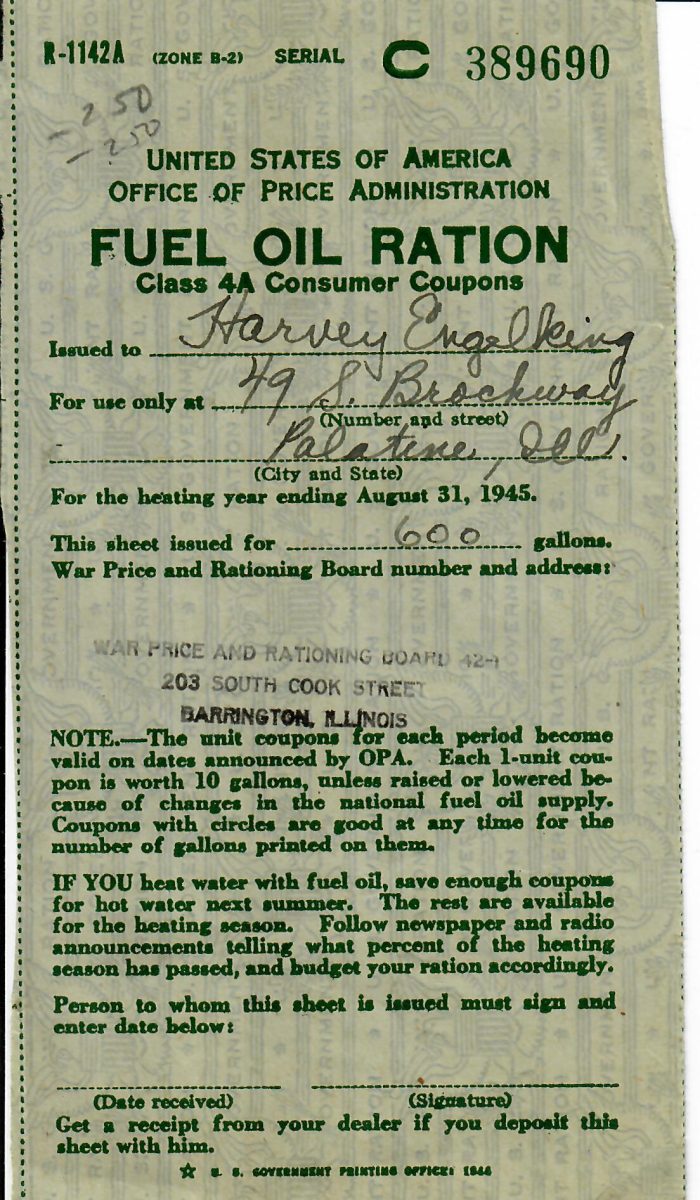
Oil rationing during the war was crucial in diverting gasoline and rubber to the military, ensuring fair distribution, and curbing inflation. It limited civilians to roughly 3 gallons of gas weekly to conserve rubber for tires and fuel for tanks, planes, and ships, enabling the Allied victory. This ration card, posessed by Harvey Engelking of Palatine, was used to purchase gasoline.
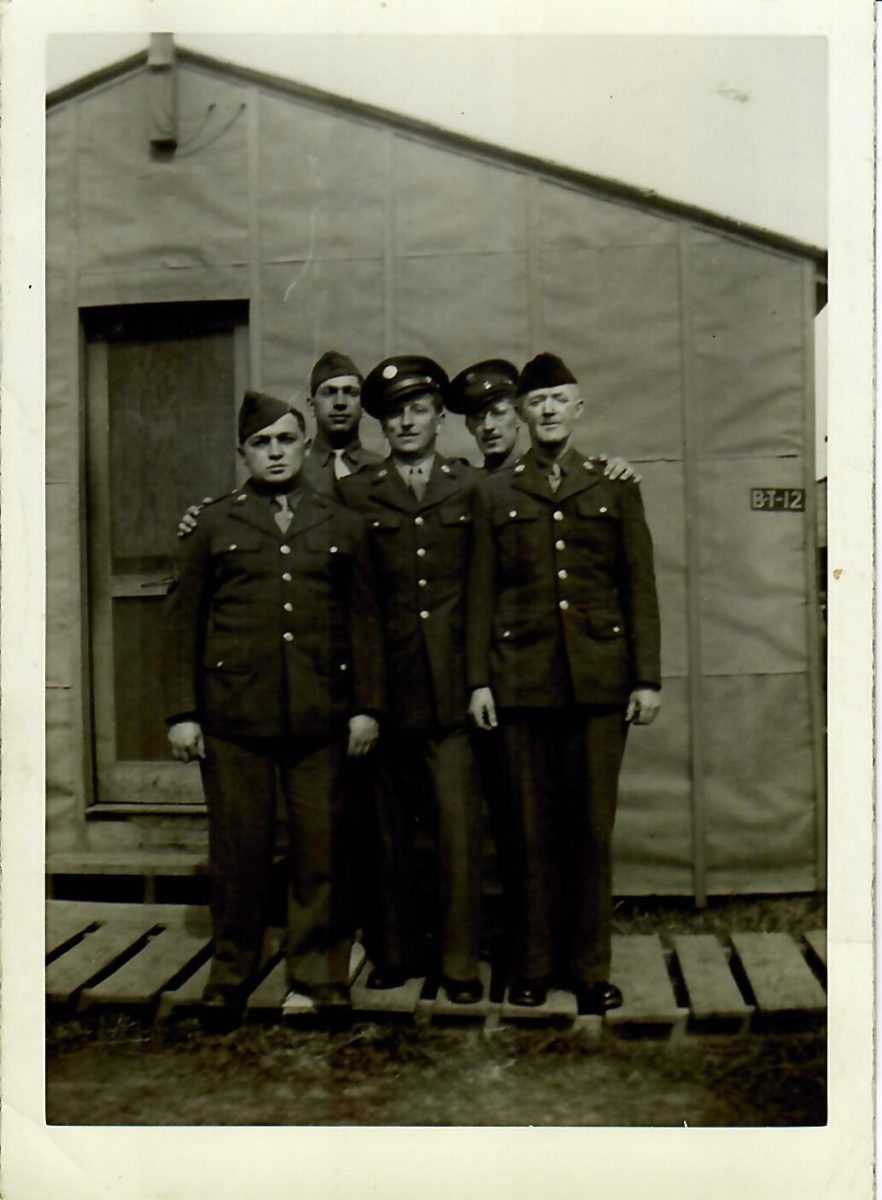
“Corporal Leonard,” a soldier from Palatine sent many postcards back home to his “darling” Lottie. In the first one, he signs off with “your hunk-of-a-man, Cpl. Leonard.”
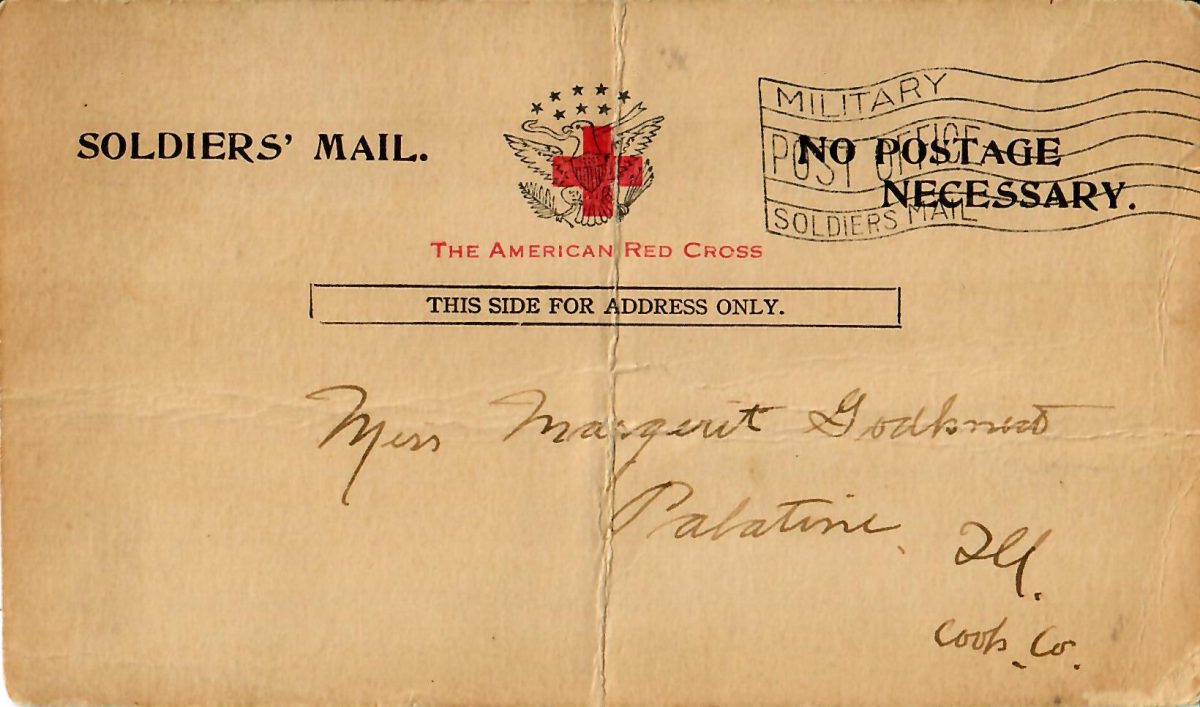
Oftentimes, when soldiers would arrive overseas, their spouses or family members would receive a notice of their safe passage. This postcard was sent by Harry D. Bergman back home to Palatine.
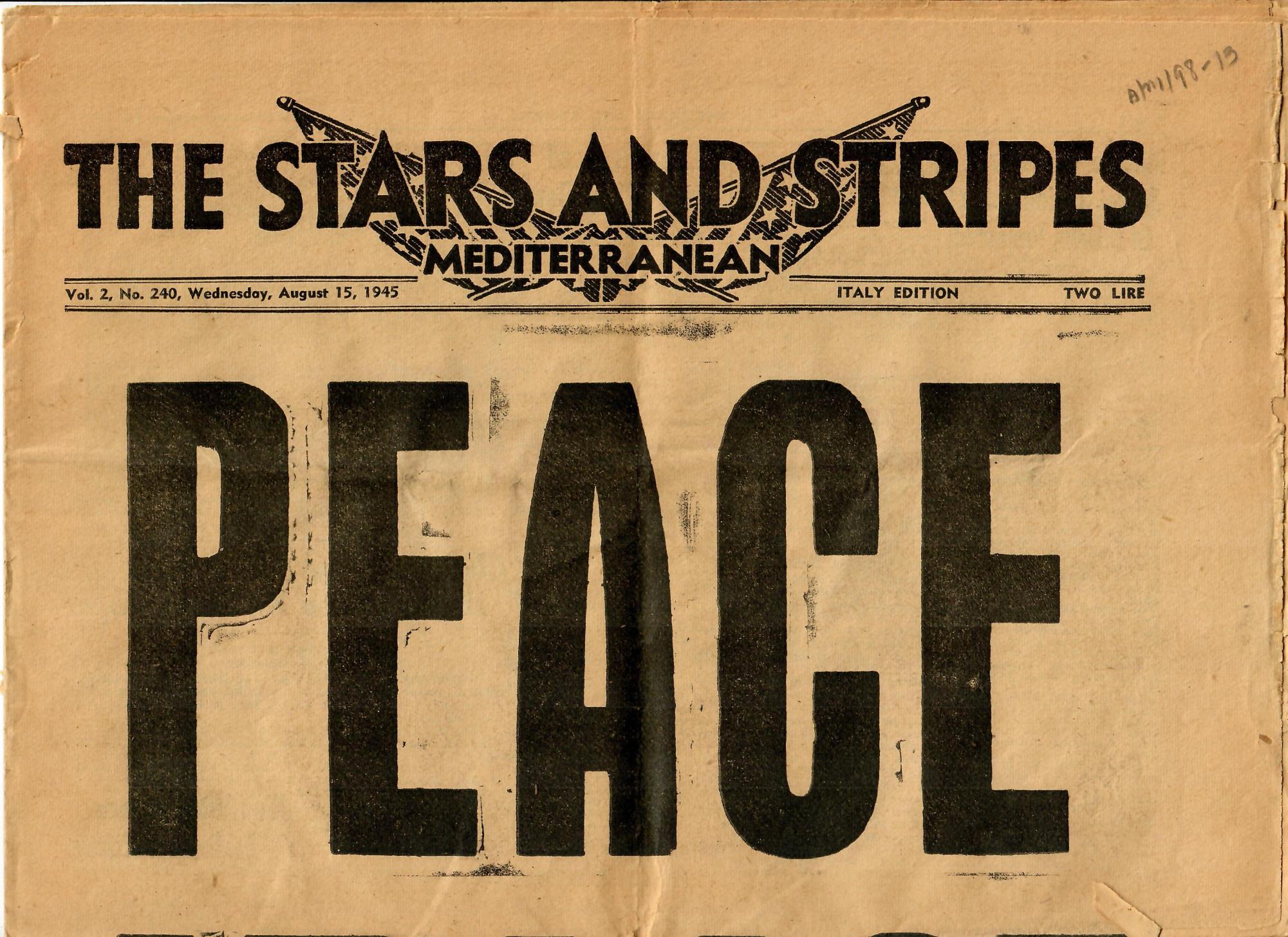
On May 8, 1945, Palatine High School marked Victory in Europe. Students stayed in their classrooms until two bells signaled the news, then bowed their heads in silent prayer facing east for the fallen. They gathered at the flagpole as the band played, and local churches held evening observances in the school auditorium.
Despite the elation, The Spotlight reminded students that the war was not yet over. The Pacific theater still demanded attention, and many soldiers would be redeployed there after V-E Day. “Let’s not get too forgetful,” the paper advised, urging the community to conserve energy and attention for the final push toward V-J Day.
A few weeks earlier, on April 16, students had gathered in the auditorium to hear a broadcast of President Harry S. Truman’s first message to Congress. Truman pledged to continue the foreign policy of Franklin D. Roosevelt and assured Americans the government would pursue the war to the unconditional surrender of both Germany and Japan.
For Palatine, V-E Day was celebratory and somber in equal measure. The town’s fire whistle and church bells rang out. Families shared memories of service. Students honored those who had sacrificed overseas, knowing victory in Europe was only the first step.
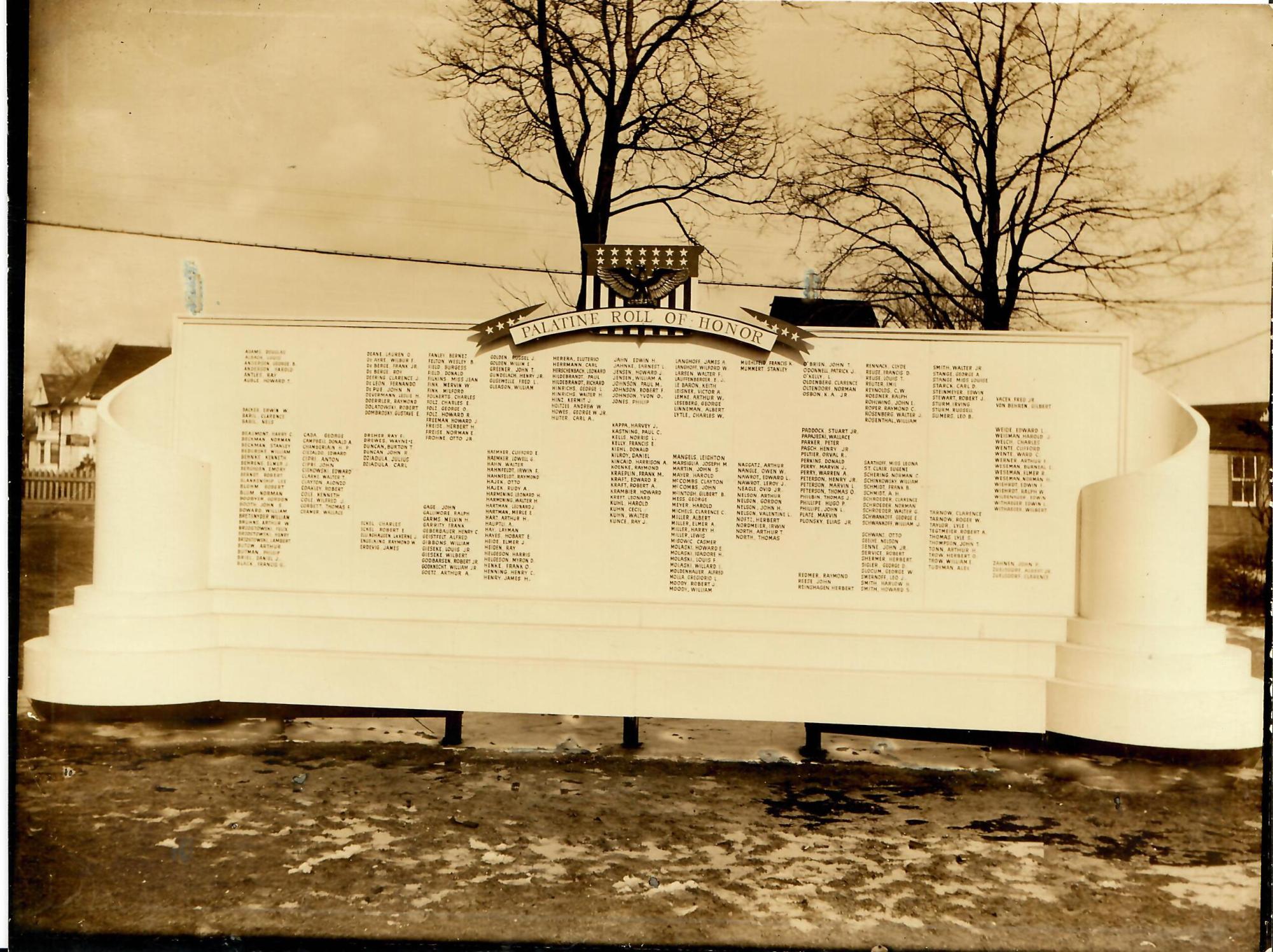
In the years after the war, Palatine students and teachers reflected on what had changed inside classrooms, and beyond.
Schools had adapted during the war years. Physical education shifted to emphasize conditioning to prepare young men for potential service, while math and social studies moved toward practical wartime skills and a deeper understanding of history and ideology. After the war, the “GI Bill” reshaped higher education, as millions of returning veterans transformed college campuses and helped build a new American middle class.
In 1947, student-reporters from The Spotlight conducted an interview with Gen. Dwight D. Eisenhower. He discussed leadership, morale and the home front’s role in victory. When asked about his toughest wartime decision, Eisenhower pointed to ordering airborne troops over Cherbourg, a port city on France’s Cotentin Peninsula.
“My aides warned most men would be killed, but it was the only way to capture the peninsula,” Eisenhower told the students, noting the operation’s success.
That a student newspaper from a small Illinois town sat down with the Supreme Allied Commander just two years after the war ended is itself a testament to what The Spotlight and the Cutlass have always tried to do: document history as it happens, and ask the questions that matter.
“Studying history isn’t just about events; it’s about people, decisions, and the stakes they faced,” Miller said. “Every generation faces challenges. Seeing what was at risk in the 1940s helps students grasp the weight of responsibility and the complexity of making history.”
100 years after Cutlass first went to press, those stakes and those people are still worth remembering