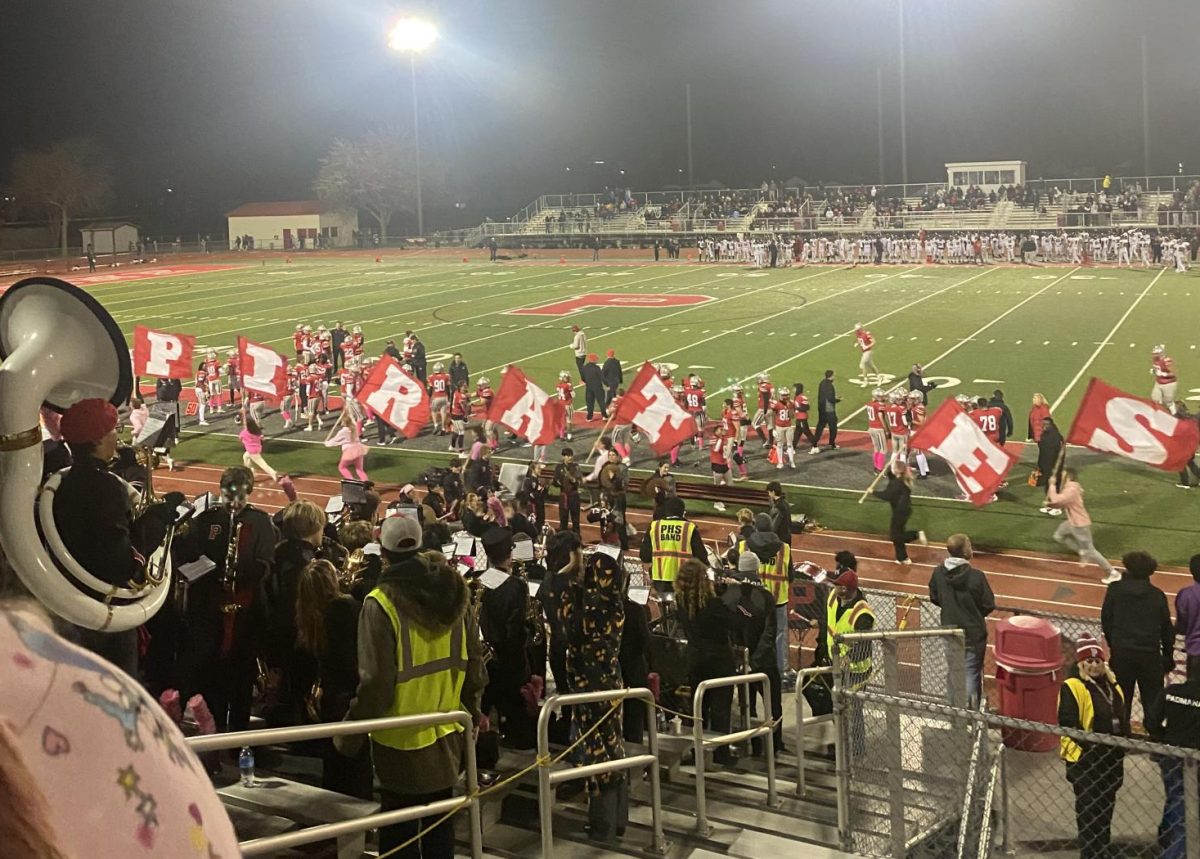
Playing any sport comes with intense competition, competition that can be deeply influenced by who’s watching from the stands. A basketball player might lose possession of the ball because of a sudden distraction, a gymnast might slip off the balance beam after feeling the crowd’s eyes on her, and a softball player might strike out simply from knowing a college scout is in the audience. Every athlete, at some point in their career, faces mental challenges or performance struggles brought on by the pressure of spectators.
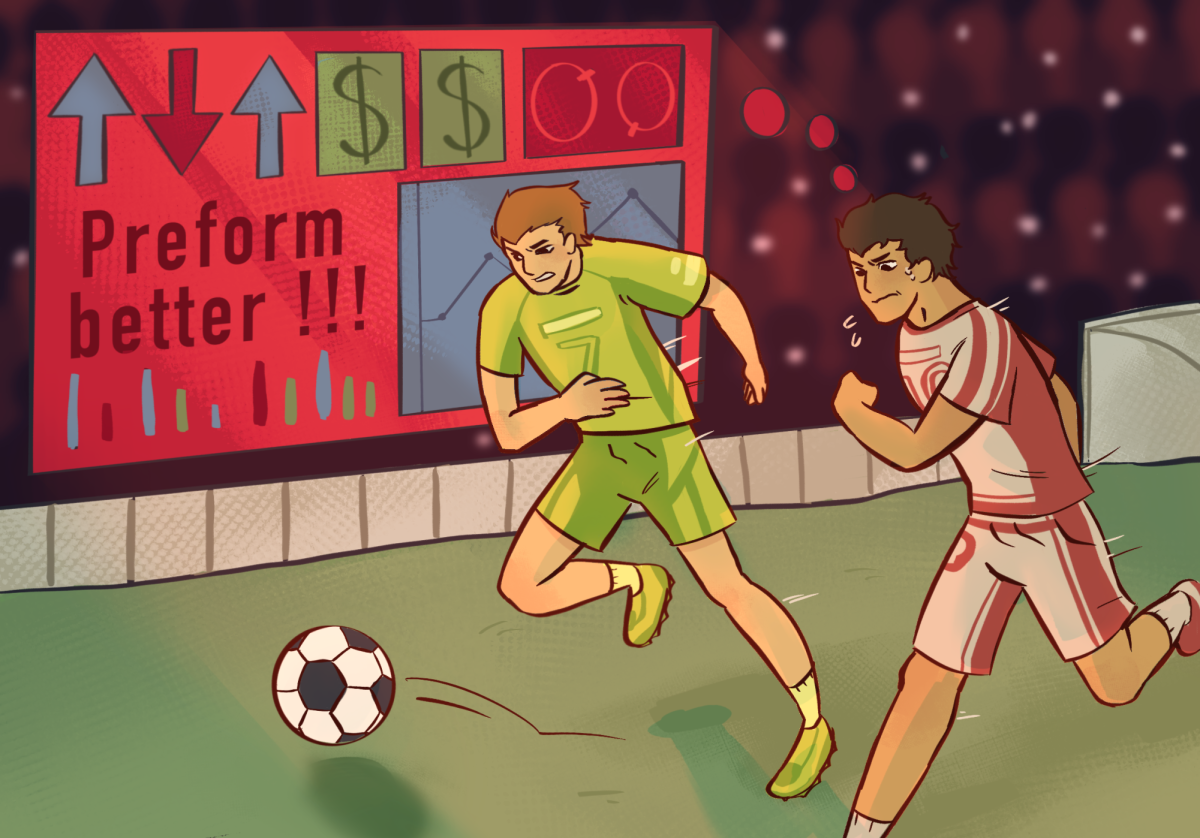
Although some believe that their loud boos and harsh ridicule during sporting events have little impact on the athletes they watch, fan behavior significantly affects players’ performance and mental health. Therefore, the overwhelming pressure from fans, combined with limited positive encouragement, causes athletes at all levels to struggle with performance and mental health.
During the 2021 Tokyo Olympics, Simone Biles, a world renowned gymnast stepped away from the biggest stage of her career. Due to overwhelming public pressure the gymnast suffered from a dangerous mental block. She faced intense, global scrutiny and unrealistic expectations during her events, causing her to withdraw completely, and step away from the competition.
An article featured on the Olympics primarily website wrote, “After the fact, her bravery showed the world the importance of prioritizing oneself, even when it means walking away from a dream”. Simone Biles’s decision to withdraw was a powerful reminder that protecting mental health must come before performance, especially amid harsh public criticism.
Some may argue that having the ability to look past fan interaction betters the performance of an athlete. According to PubMed, a reputable database for peer-reviewed scientific studies, “Athletes with ‘high resilience’ profiles were more likely to be men, exhibit better health-related behaviors, and have higher levels of psychological well-being and perceived performance.” However, while resilience can help athletes manage pressure, even the most mentally strong individuals can still be negatively affected by constant criticism and hostile fan behavior.
This is not something that Olympic athletes experience alone. Even high school athletes experience this pressure. Teenage softball player Meghan Czyzowicz explained she always feels the mental pressure of those watching her play. “I probably put most pressure on myself because I want to be better for everyone that is around me,” she explained. “When I play poorly, it sits more heavily on me.”. I lose focus and forget how to play the sport I’ve been playing all my life.”
She added that positive encouragement is often uneven. “Athletes should be encouraged by everyone for everything, even if it’s small,” Czyzowicz said. “The ones who don’t get that support tend to have their flaws pointed out more.”
Her father, Garett Czyzowicz has seen firsthand how this type of pressure can begin early. “There are definitely parents who expect too much and put a lot more pressure on their children,” he said. “I have seen girls that had so much pressure put on them by their parents that it made them not enjoy the game anymore. They eventually just quit the sport altogether.”
Czyzowicz also pointed to the growing power of social media, saying, “Parents don’t understand how much social media has increased the stakes for recreational athletes. Kids are seeing others posting their highlights, and they feel they need to do the same, placing undue pressure.”
These experiences have been backed up by scientific evidence. The American Psychological Association says that constant public pressure can result in “increased anxiety, self-doubt, and burnout” among sportspeople. A 2023 report published by ESPN also found similarly that professional male athletes such as NBA All-Star Kevin Love have endured panic attacks due to pressure from fans and expectations illustrating that mental pressure is present even at the professional level.
At the end of the day, athletes are human. Their minds are as vulnerable as their bodies, and they need to be treated with the same level of sympathy and understanding. The energy of a crowd can lift confidence to unprecedented heights or destroy it. As Garett Czyzowicz stated, “Positivity always wins in the end.” Supporters, coaches, and parents should keep in mind that it is not pressure that makes sportspersons actually achieve their best, but support.