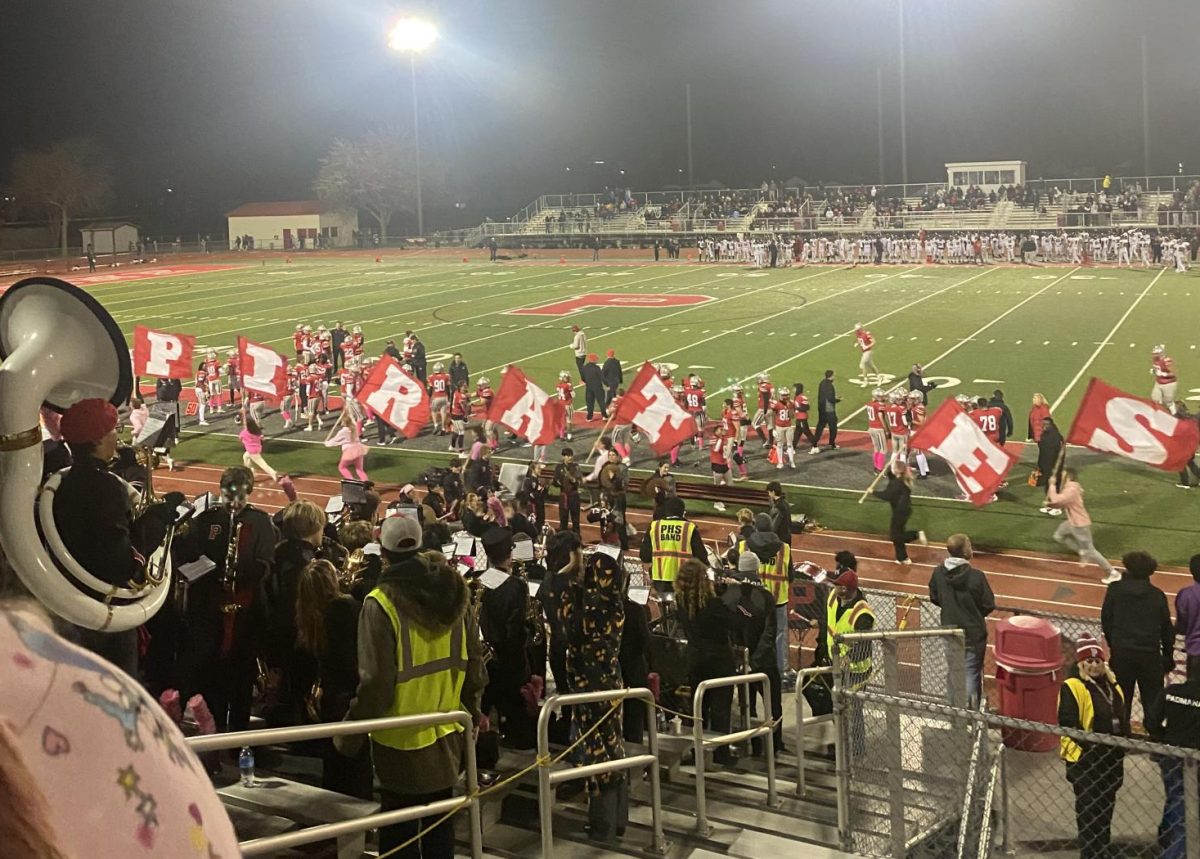
Last year, one of my teammates suddenly stopped talking at practice. She used to laugh and be the loudest and always stayed late to work on skills, but then she just did not anymore. Nobody knew what to say, and our coach did not know how to help. Watching that happen made me realize how important it is for coaches to understand what their athletes might be going through.
Coaches should be trained in mental health awareness so they can recognize when athletes are struggling, support them, and guide them to the right help.
Palatine High School Gym Teacher and Gymnastic Coach Scott Hagel talked about the training the coaches receive.
“I actually took a class called sports psychology… but that class was for PE, not coaching,” Hagel said.
He also explained the yearly outline modules for coaches.
“Some of them sometimes deal with a little bit of mental health, but it is more mental health than mental training,” Hagel said.
This shows that while coaches do learn something, it is not the kind of training that helps them understand real struggles athletes face.
According to the National Federation of State High School Associations, more than two-thirds of high school students play sports. This means that coaches are around as many teens who might be dealing with anxiety, pressure, or stress but not saying anything about it.
“If I have a good relationship with the student, I can get a good idea about what is going on. But not always. Some students do not like to open up and share,” Hagel said.
This is exactly why coaches need mental health training. Many athletes keep things to themselves. They might not say they are overwhelmed, but their own behavior can show it. A trained coach would know how to notice those signs.
Some people argue mental health is the counselors job, not the coach’s. Coaches should not become therapist. Mental Health Training isn’t about diagnosing or treating. It is about recognizing when something is wrong and going what to do next. It is similar to CPR training coaches are not doctors but they should know how to respond in emergencies.
Sports are supposed to help students grow as people, not just as athletes.
“Although some coaches like to think this is training students for the Olympics, this is about giving students an opportunity to grow as a person through their involvement in sports.” Hagel said.
This reminds us that coaches help shape character, confidence, and emotional wellbeing, not just athletic performance.
“Coaches should foster team cultures that support athlete mental health and help identify and connect at risk athletes to appropriate mental health services,” states a study from PubMed.
This proves that experts agree coaches have responsibility when it comes to mental wellbeing.
Organizations like Athletes for Hope work to bring awareness to mental health and sports, but coaches are the ones who can make the biggest difference everyday. When a coach listens, checks in and cares, athletes feel safer and more supported.
If we want athletes to perform well and feel supported, then coaches need training that helps them take care of the whole person, not just the performance. Mental health training is an extra. It is necessary.