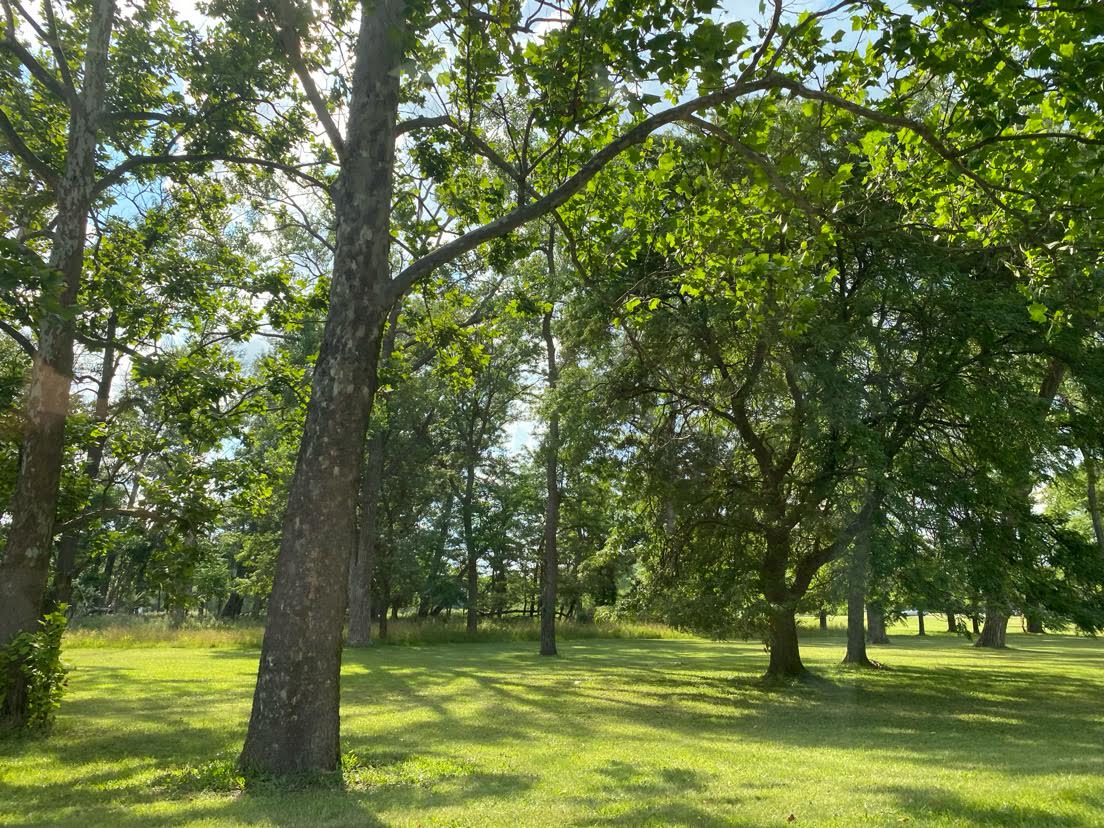
We often find ourselves inattentionally blind to what’s directly in front of us, therefore leaving evident beauty unnoticed. I think trees fall subject to this human phenomenon.
Trees survive longer than any other organism on earth, living past 4000 years. They withstand the changes of climate, weather, disasters, and humans, while evolving themselves with the seasons. No matter where the wind blows, their leaves and branches flow with it, succumbing to the route nature chooses while still staying firm with their roots.
Unique to each species and habitat, trees individually bloom depending on the season. We may immediately assume autumn as being the season at which the beauty of trees thrive, but this doesn’t mean it’s the case for every species. Evergreens, for example, have a name which immediately gives away their resilience, remaining a constant green no matter the change of seasons. Others, like Japanese Magnolias, bloom in winter, thriving under the pressure of snow by flooding flashes of red blossoms through an endless white. Then lies the spring blossomers, the summer bloomers, and, of course, our favorite autumn changers, which give us the reds and oranges that make fall so beloved.
But no matter the species, the season they bloom, or the habitat they exist, trees help one another to survive. Through an underground network of soil fungi, trees send nutrients and even communicate with one another. Whether they transport water or nutrients derived from photosynthesis, trees depend on one another for survival. In fact, tree populations often have what’s known as a “mother tree”, a larger and older tree that has survived for many phases of the Earth. The younger trees rely on the DNA of the mother tree, given that the DNA holds millennia worth of cellular information to live through climatal evolution. Without the mother tree, many saplings would not withstand the changes of time.
And eventually, these saplings grow strong enough to support others. Trees exist in a cycle of growth and change while relying on one another throughout it.
We may not even realize the similarity of the human species to trees.
We all have fixed traits which contribute to the utmost core of our identity, being the roots of who we are as people; however, I believe the majority of our identities is a product of the changes we experience.
When we’re young, everything in life feels so permanent. We rely on our parents to provide and make decisions for us, making us comfortable with consistency. But as we grow older, we’re given the responsibility of facing the challenges that come with change on our own.
Since the age of three, a ballet teacher of mine has always told me that “the only thing you can count on in life is change.” I’ve heard her say this just about every day for the past thirteen years of my life. It became another one of those inattentional blindness subjects—my dance friends and I would never think about the meaning of the phrase because of how often we heard it. From instances as minor as rehearsal schedule switches to major milestones like seniors graduating to their professional careers, Shelley would always be there to remind us that change is all we can count on. As life goes on, I’ve come to realize how right she really is.
I grew up at that dance studio. Many of my most important relationships, significant memories, and impactful experiences root from those marley floors, shaping so much of who I am now. At the end of my sophomore year, the studio suffered a mass quitting crisis which jeopardized the future of the company and tainted the passion for dance in the environment. As badly as I wanted to stay because of how much the studio meant to my life, I knew it wouldn’t be enough for me anymore. I needed to branch out. In the span of a month, I had to make the decision to leave all that I knew and built at my home studio to dance pre-professionally in Chicago.
And throughout all of this, nobody tried to hold me back—they knew the change was right for me, too. “The only thing you can count on in life is change,” Shelley still told me.
Just like trees, we as people each respond to change differently. The Maple tree’s cycle is bare in winter, blooming in spring, a strong green throughout the summer, then changes to vibrant warm tones in autumn. I think that the majority of people cope with change similarly. We endure hardship that strips us of our liveliness and vibrancy, causing us to give so much energy into existing through the cold. As the harsh conditions lessen, we begin to bloom. We bloom and bloom until our lives are warm and bright again and we can stand strong in the sunlight knowing that we withstood the harshness of change and grew from it. Then autumn comes and we witness our true colors, showing how we evolved through time. The uniqueness of our new color, like the Maple tree in autumn, stands out to reveal pure beauty—beauty that had to be fought and suffered for. The product of change can be seen in the people we all grow to be, and then the cycle continues when winter comes again.
On occasion we find people like the Evergreen who have the natural ability to stay strong through any condition. Then others who, similar to Japanese Magnolias, thrive under the pressure of hardships and snow, and then still bloom in warm conditions, too. These people seem rare to me, though. I know for certain that I am a Maple tree, and I feel most people would think the same of themselves too.
I have certainly grown from the changes I experienced, but I also have a tendency to try to resist change. Consistency may be comforting, but it’s no way to grow and certainly not very attainable. I’ve had to learn to accept that the only thing I can count on in life really is change.
I always try to think of exceptions to this rule, other things that surely have to be fixed. Other than Benjamin Franklin’s “death and taxes” philosophy, nothing comes to mind. I used to think of specific people as exceptions, but not even that always applies. Which is, truthfully, a very hard pill to swallow.
We like to think of our relationships as constant; It’s difficult to accept the truth that anybody can leave your life unexpectedly as they please. There’s a reason it’s rare for childhood “BFFs” to remain close into adulthood, high school sweethearts to marry, and for families to remain intact. And that reason is change.
Like trees, we also help one another to survive. Without the support of loved ones, it’s hard to picture what life would be like and would actually be accomplished. But what happens when you lose someone who roots themselves so deeply into your life?
It’s difficult to accept that relationships fluctuate, especially when it comes to connections that have stayed consistent for so long. As our dearest Glinda of Oz tells us, people come into our lives for a reason. An easy truth to recognize, as we want to believe that friendship and family and love will find us, but the reverse of this is true as well. Just as people come into our lives for a reason, they also disappear from our lives for a reason. It can feel like forever, but I believe that the reasons reveal themselves to us with time.
Letting go of people hurts, especially when it’s somebody who you envision living your entire life with. It can take a long time to fill the dirt back after such deep roots have been forced out. Changes in relationships, to me, might be the worst changes to live with. You picture your life going a certain way, until a person your plans depended on deconstructs it. People change from strangers to friends, family to enemies, and lovers to strangers, and while this is a truth we all know, we don’t think it could ever happen to us. There’s a reason why the first stage of grief is denial, and that’s because nobody wants to believe that who they call their loved ones could change. Despite this, the wind still blows people to branch out in their own paths, and we’re forced to cope with the loss of our leaves. We’re forced to keep ourselves warm for the winter. We’re forced to love new people. We’re forced to branch out elsewhere.
Then, Spring comes again and new leaves begin to grow. If a tree has been surviving this cycle of changing seasons for thousands of years, I can survive it for the span of my own lifetime. Whilst in the moment, it’s hard for me to acknowledge the beauty and importance of change, even though I’ve witnessed firsthand the growth I experience because of it. With time, I’ve learned to try not to resist change. It seems to be a waste of precious living to put so much time into preventing what will inevitably happen anyway. I am the person I am because of all that I’ve experienced. My life will continue to change whether I want it to or not, and I will continue to grow from it. I’m learning to be okay with that.
I give the experience of change 1 star, but the product of it 5.